The Total Solar Eclipse of 2024
I have wanted to see a total solar eclipse for as long as I can remember. My father used to tell me about the total solar eclipse he saw in Southern India in 1980, and would often describe how magnificent it was to see the Sun completely disappear in the middle of the day. Hearing those stories from a very young age made seeing one myself a sort of bucket list item.
The first one I actually planned to see was the annular solar eclipse of 2020, which was visible from parts of India. I had made plans to travel and watch it, but then COVID happened and everything changed. The eclipse still happened, but I never got to see it.
By then, I had also started thinking about moving to the United States for my master’s degree. I came across the path of the April 8, 2024 total solar eclipse and decided that this was one event I was definitely not going to miss. I had almost four years to prepare for it, which may sound like a lot of time - but there was one major problem with planning something like this.
Planning the Eclipse
You don’t really know where you will be able to see it until very close to the day.
The path of totality for this eclipse stretched across Mexico, the United States and Canada, passing through several major cities. That made choosing a location relatively easy in theory, but weather was a completely different problem. A total solar eclipse is only a few minutes long, and having a cloud in the wrong place at the wrong time can completely ruin the experience.
There were plenty of places along the path that had better historical weather prospects. Some locations in the Midwest, for example, had statistically better odds of clear skies. But I live in Florida, so I also had to consider how much it would actually cost and how difficult it would be to get there. Dallas and Burlington ended up making the most economic sense for me, with reasonable flight options and easy access to the path of totality. So those became my two choices.
I then did what any reasonable person would do and booked non-refundable flights to both places.
For about two weeks before the eclipse, I started tracking the weather forecasts for both locations every day. I was comparing different weather models and maintaining a small decision matrix to see how the forecast was changing. It was interesting to see how differently the models behaved as the date got closer. A location that looked perfect one day could suddenly have a terrible forecast the next, and then recover again a few days later.
Eventually Burlington started looking like the safer choice. The forecasts there were more consistent and the probability of clear skies was better, so I decided to go with it. The Dallas flight was never used.
Improvising the photography setup
I also wanted to photograph the eclipse, so I spent some time putting together a setup for that. I had a telescope solar filter that obviously wasn’t designed to fit my camera, so I ended up improvising and fitting it inside a simple camera filter ring.
It actually worked surprisingly well. I also decided that I would only look at the Sun through the camera’s display and not through the viewfinder. There wasn’t much point in taking a risk with my eyes just to get a photograph.
Getting to Burlington
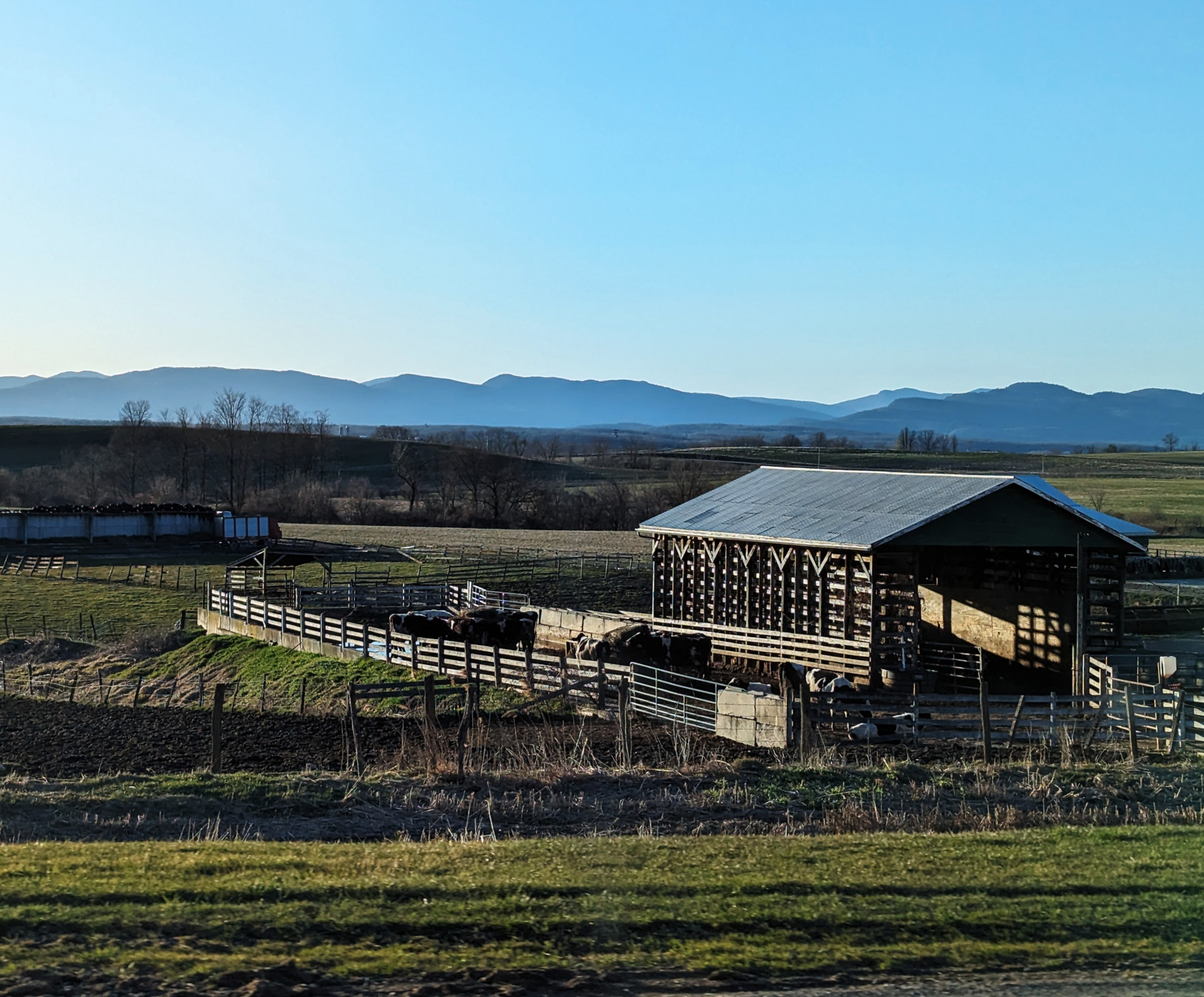
The drive to Burligton took us through many beautiful country roads.
A couple of days before the eclipse, I flew to New York to meet my girlfriend and we rented a car to drive up to Vermont. As we got closer to Burlington, it became clear just how many people had planned the same trip. Almost all the accommodation around the area had already been booked, which was quite unusual for the region. We eventually managed to find an extremely overpriced AirBnB near Lake George and decided to stay there for the night before making the final drive to Burlington the next morning.
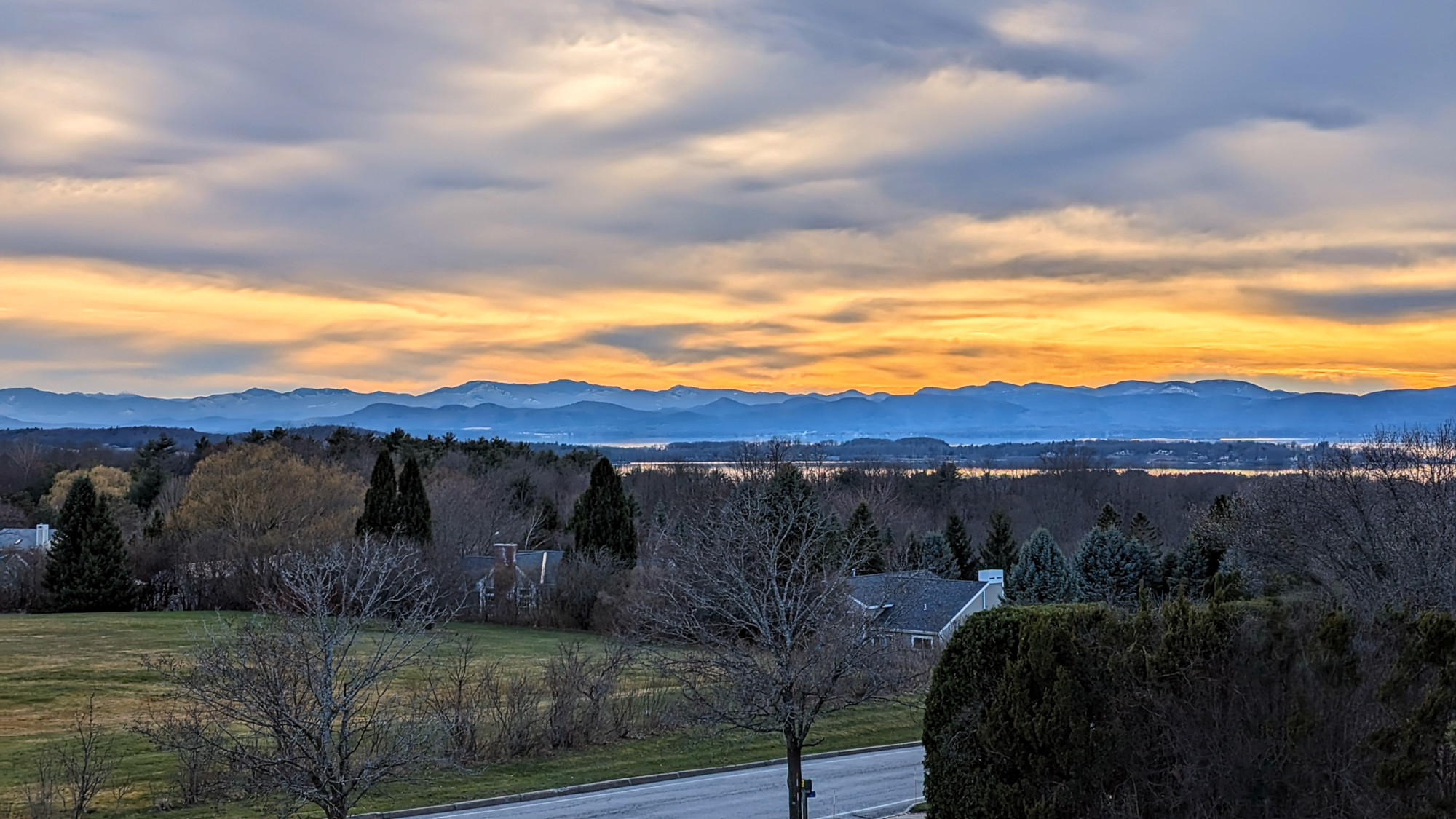
The Adirondacks from a scenic point on the way.
Burlington had clearly realized what was about to happen and had prepared for it. The waterfront overlooking Lake Champlain and the Adirondacks had been turned into a large eclipse viewing area, with events and shows happening throughout the day. People had travelled from all over the country, and some had brought incredibly elaborate equipment to watch and photograph the eclipse. There were telescopes and cameras everywhere, with some setups looking more like professional observatories than something you would expect to see at a public event.
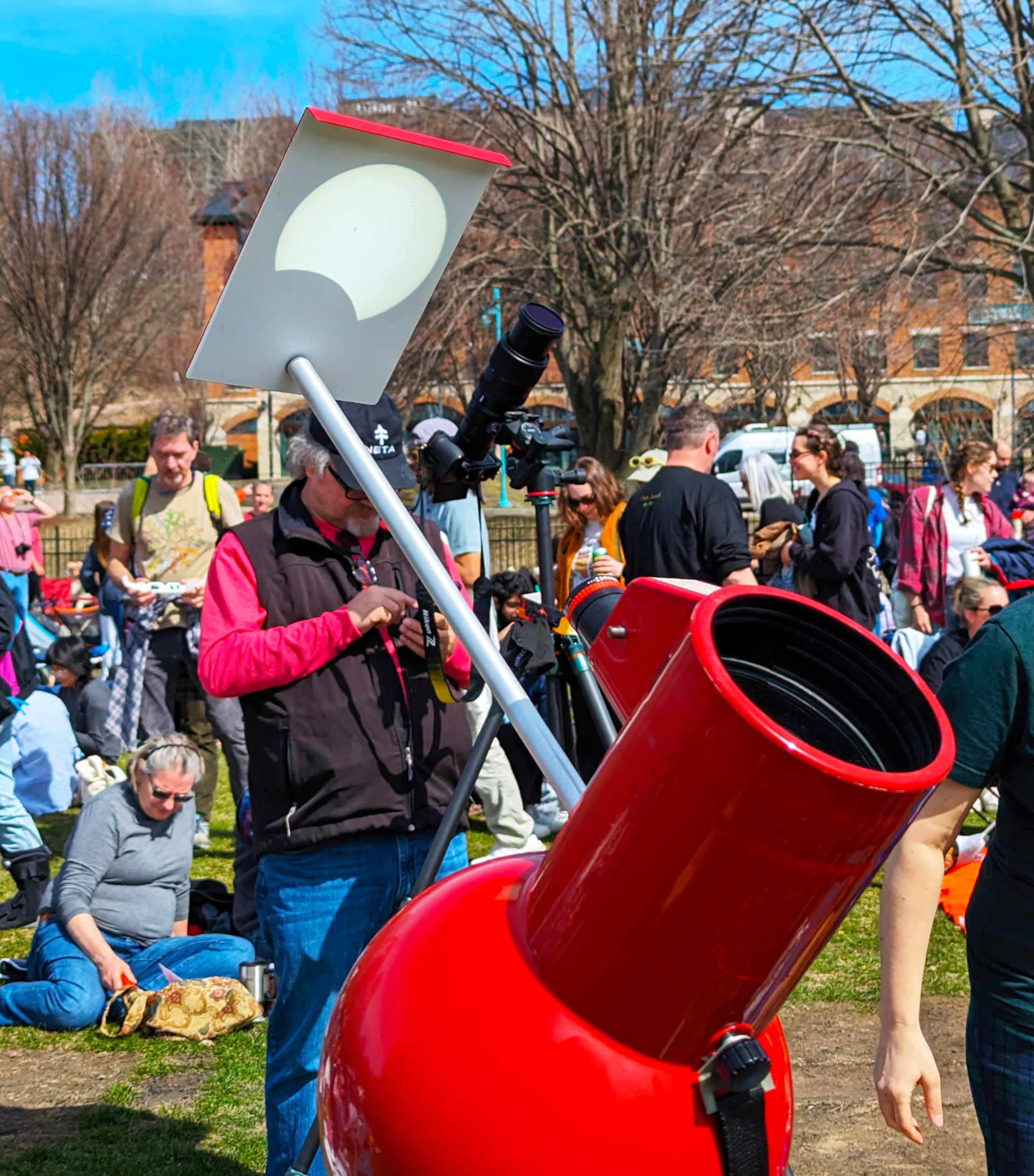
A solar projection scope.
We found a spot along the waterfront and waited for the eclipse to begin.
The Eclipse
The first part of the eclipse was fairly uneventful. The Moon slowly started covering the Sun, and through the eclipse glasses it was easy to see the shape changing. As more of the Sun disappeared, however, the surroundings began to change in ways that were much more noticeable than I had expected. The temperature started dropping, the wind changed, and the light became increasingly strange.
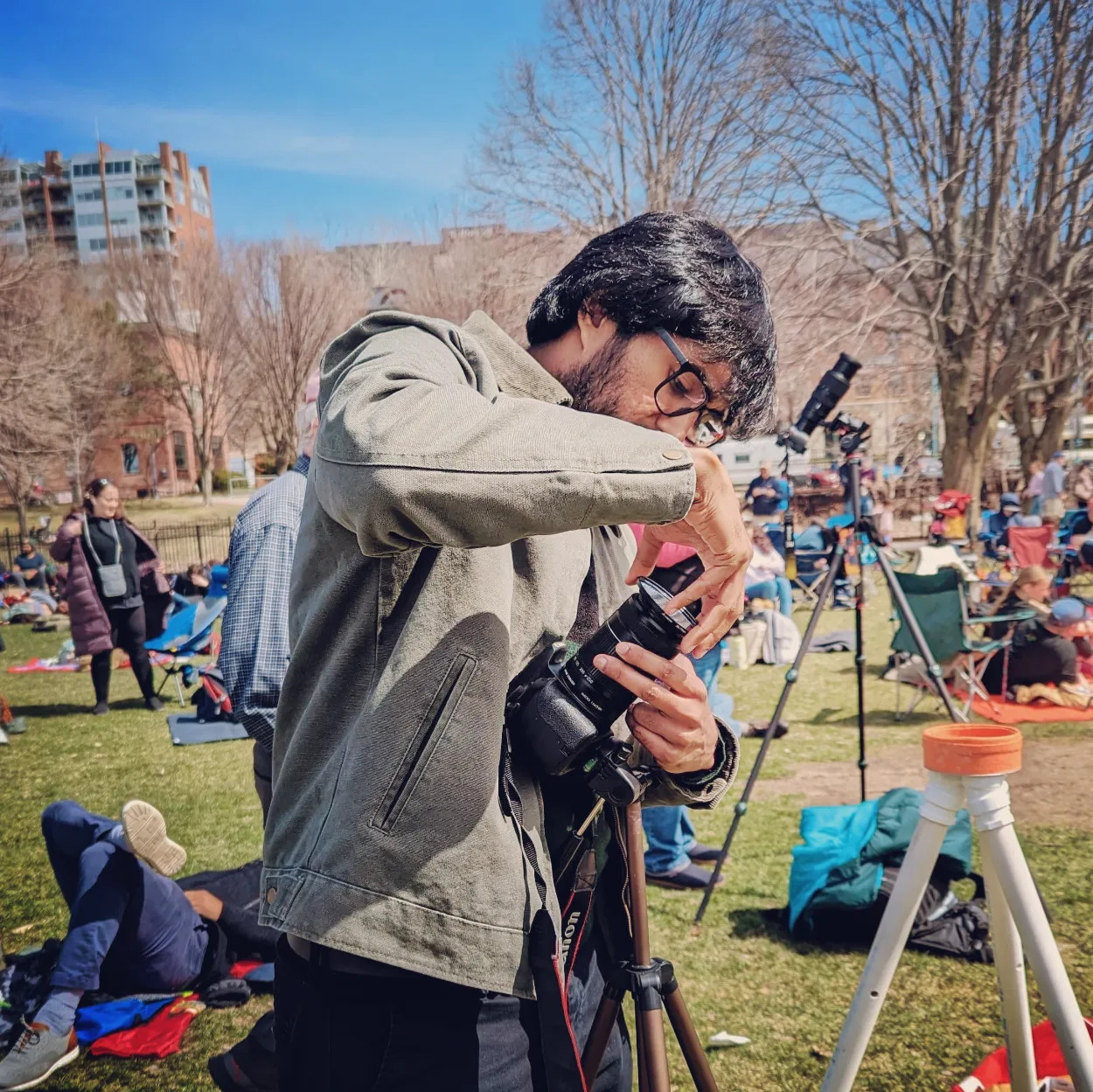
Me, attaching the lens filter to the camera
We also started noticing birds flying away. They seemed to be reacting to the sudden change in light and temperature as if evening was arriving several hours earlier than it should. Across the lake, the Adirondacks gradually lost their usual color and started looking dull and almost dusky.
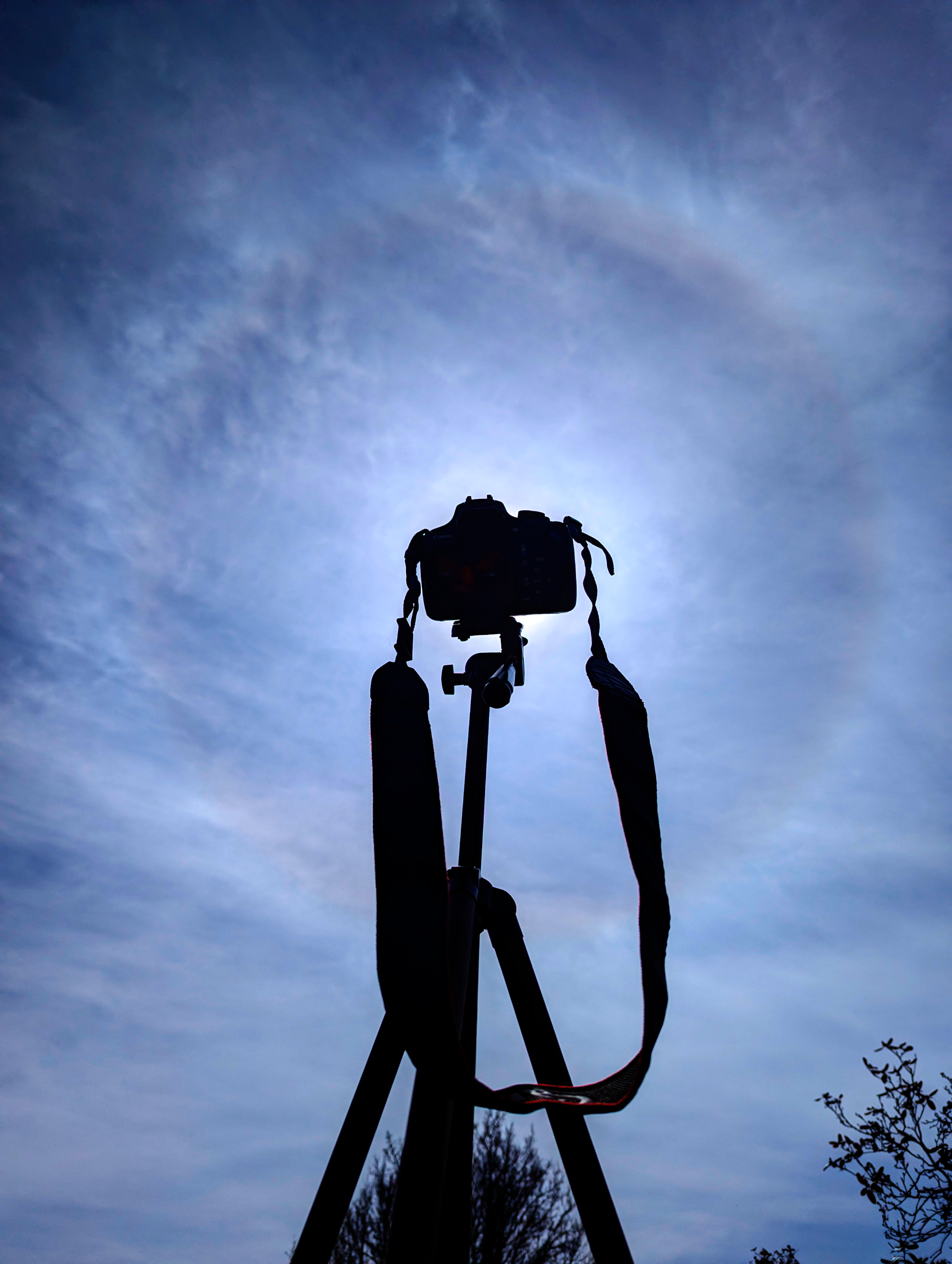
Some cirrus clouds moved in before totality for a few minutes of a beautiful halo.
The closer we got to totality, the more unusual everything looked. The Sun was almost completely covered and the landscape around us was getting darker by the minute. There was still light on the horizon, but it no longer looked like normal daylight.
Then the last part of the Sun disappeared.
The Totality
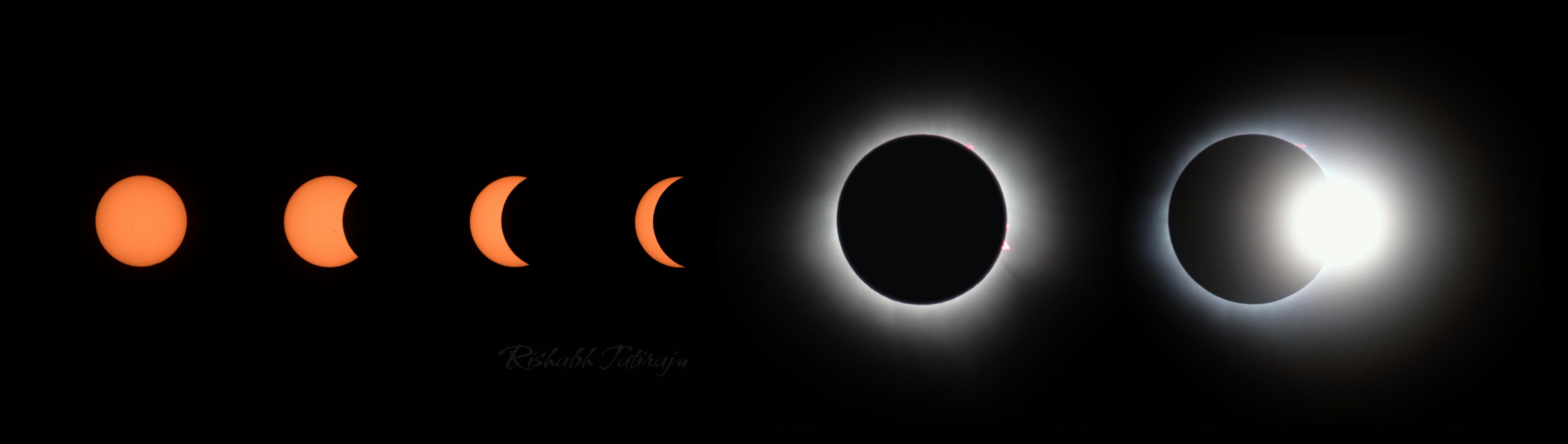
A montage of the eclipse.
I managed to capture the diamond ring just as totality began. This was the moment I had spent the last few years thinking about, and after taking the photograph I finally put the camera down and removed my eclipse glasses.
What I saw was completely different from any photograph or video I had seen before.
The Moon was a perfectly dark circle in the middle of the sky, surrounded by the faint white corona of the Sun. The sky had become dark enough that the landscape looked almost like it was being viewed at dusk, while the horizon still had a strange glow around it. The Adirondacks across the lake had almost disappeared into the darkness.
I actually got teary eyed.
I had heard my father talk about seeing a total eclipse when I was a kid, and here I was, years later, standing in Vermont watching the same thing happen. For something I had wanted to see for so long, it felt almost surreal that it was finally happening.
For those few minutes, it genuinely felt unreal. We were standing in the middle of the day watching the Sun disappear behind the Moon, with the solar corona visible around it. I had known exactly what was going to happen for years, but knowing the science behind it did very little to prepare me for actually seeing it.
Then the light started coming back - the second diamond ring appeared, the sky started getting brighter and the landscape slowly returned to normal. The whole thing was over almost as quickly as it had started.
After waiting for this eclipse for almost four years, the actual totality had lasted only a few minutes. But it was easily one of the most incredible things I have ever seen.
On the drive back, my girlfriend and I decided that we wanted to see another one.
I guess we are eclipse hunters now!