The Forgotten Path That Built St. Petersburg
I want to first introduce myself as someone who is really into local history that shaped how things are today. Growing up in Pune, a city in India with a rich medieval history that is still preserved today, I am generally fascinated by how things used to be.
Having grown up in India, I have seen firsthand how trains shape a country’s development. In fact, India’s growth can be largely attributed to its railway network. While trains are a rare sight in the United States today, they were once the lifeline of this country, much like they still are in India.
It’s no surprise then that Florida’s St. Petersburg, too, once had a sprawling train system which helped the city flourish. This coincided with the peak of railroad in the United States and was instrumental in the founding of the city.
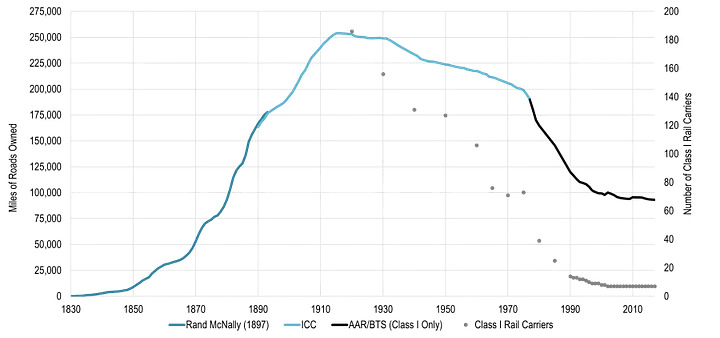
Rail track mileage by year. 1910s were the golden years of railways in the United States.
Remnants of St. Petersburg’s once-thriving Orange Belt Railway still linger in the downtown area, slowly rusting away. I set out on foot to explore this forgotten line.
Before diving into the exploration, let’s take a brief look at the history of this railway line and its role in shaping the St. Petersburg we know today.
Peter Demens, born Pyotr Alexeyevitch Dementyev, was a liberal and highly educated Russian aristocrat. His outspoken criticism of the czarist regime reportedly led to his emigration to the United States in the 1880s as a political exile.
After leaving his family behind in Russia, Demens settled in Florida and invested in the lumber business, eventually becoming a supplier to the Orange Belt Railway. When the railway fell into debt, he acquired its charter and ambitiously extended the lines from Kissimmee, near Orlando, to the Tampa Bay area.
For the railway’s terminus, Demens selected southern Pinellas County, then an undeveloped area with no official name or street plan. The land was owned by John C. Williams Sr. of Detroit, who had purchased it in the late 1870s. In a historic deal that would transform the region, Williams transferred portions of his land holdings to Demens in exchange for extending the Orange Belt Railway to the area, laying the groundwork for a new city.
In 1888, St. Petersburg was co-founded by these two visionaries and was formally incorporated in 1892. The railroad proved vital to the city’s growth, providing a steady flow of people and goods. According to local legend, Demens won the naming rights to the city in a game of chance — either a coin toss or drawing of straws — and named it after his Russian hometown, St. Petersburg. As a consolation, Williams was granted the right to name the city’s first hotel ‘Detroit’ after his own hometown.
Despite his crucial role in establishing the city, Demens’ ambitious railway extensions to Tampa Bay and Jacksonville led to mounting debts, forcing him to sell the business in 1889. He subsequently retired to California, where he passed away in 1919.
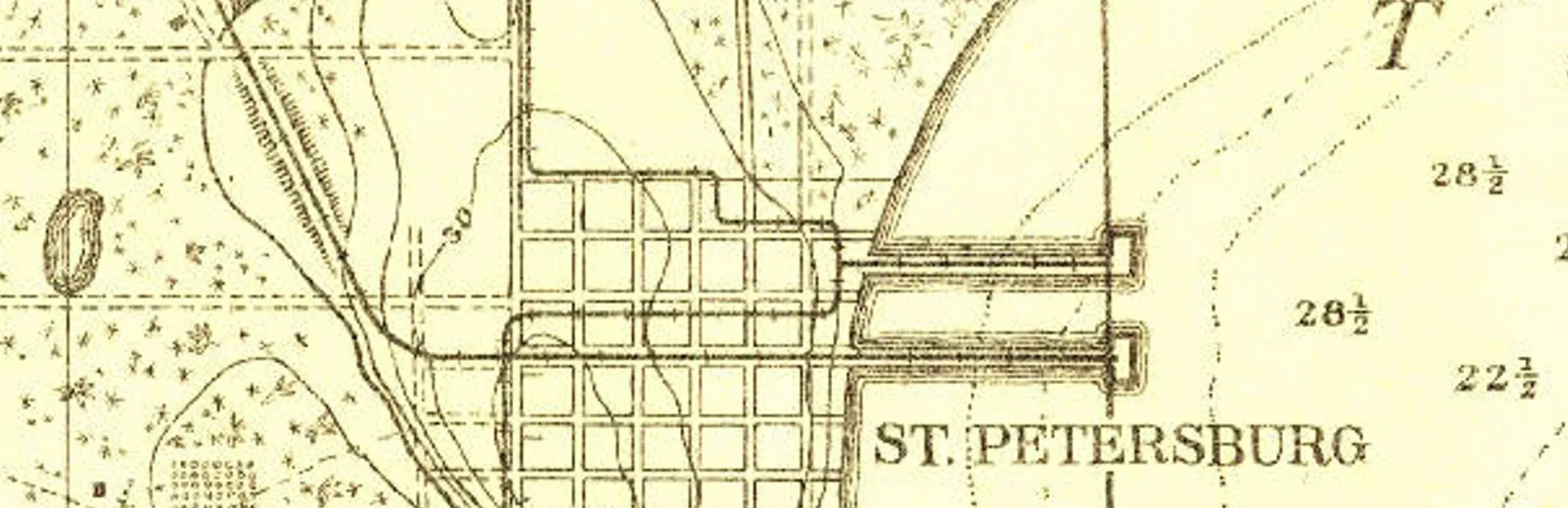
The earliest known map of St. Petersburg comes from a 1912 topographical survey by the United States Geological Survey. On this document, Demens’ Orange Belt Railroad is clearly marked, and by then St. Petersburg had already grown into a city spanning many blocks.
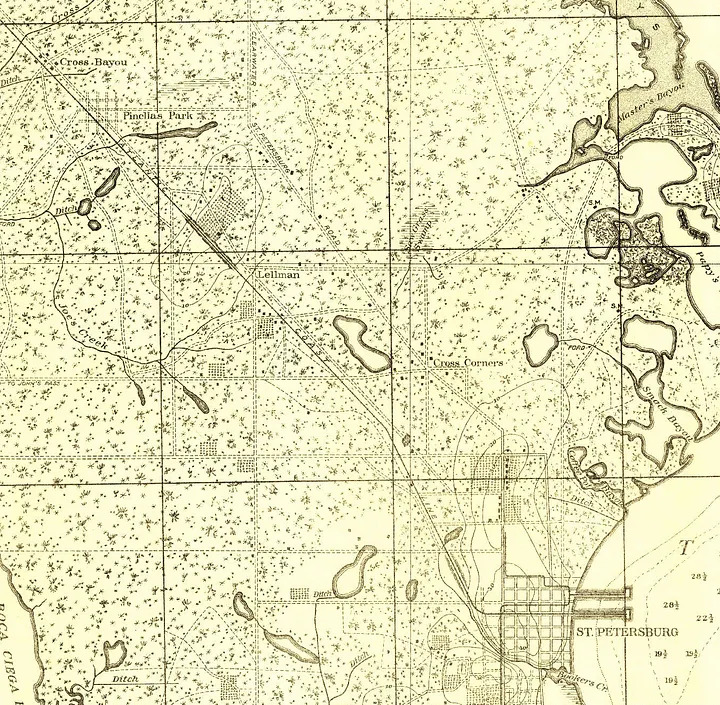
A cutout of the 1912 USGS map showing the railway line cutting across Pinellas County.
Today’s landscape stands in stark contrast to those early days. Demens Landing Park, now a peaceful public space, sits on what was once a bustling rail terminal where goods flowed in and out of the young city. A railway pier once stretched a quarter mile into Tampa Bay from this spot, rivaling the length of today’s public pier.
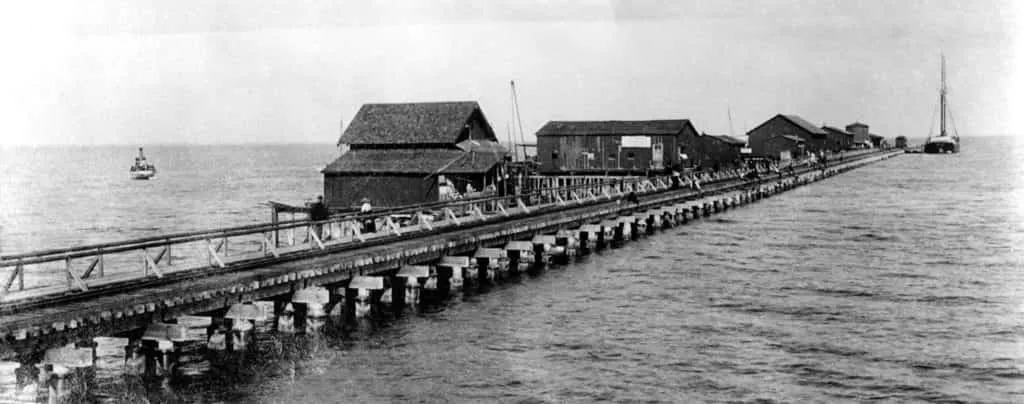
Archive image of the original railway pier, courtesy of the State Archives of Florida.
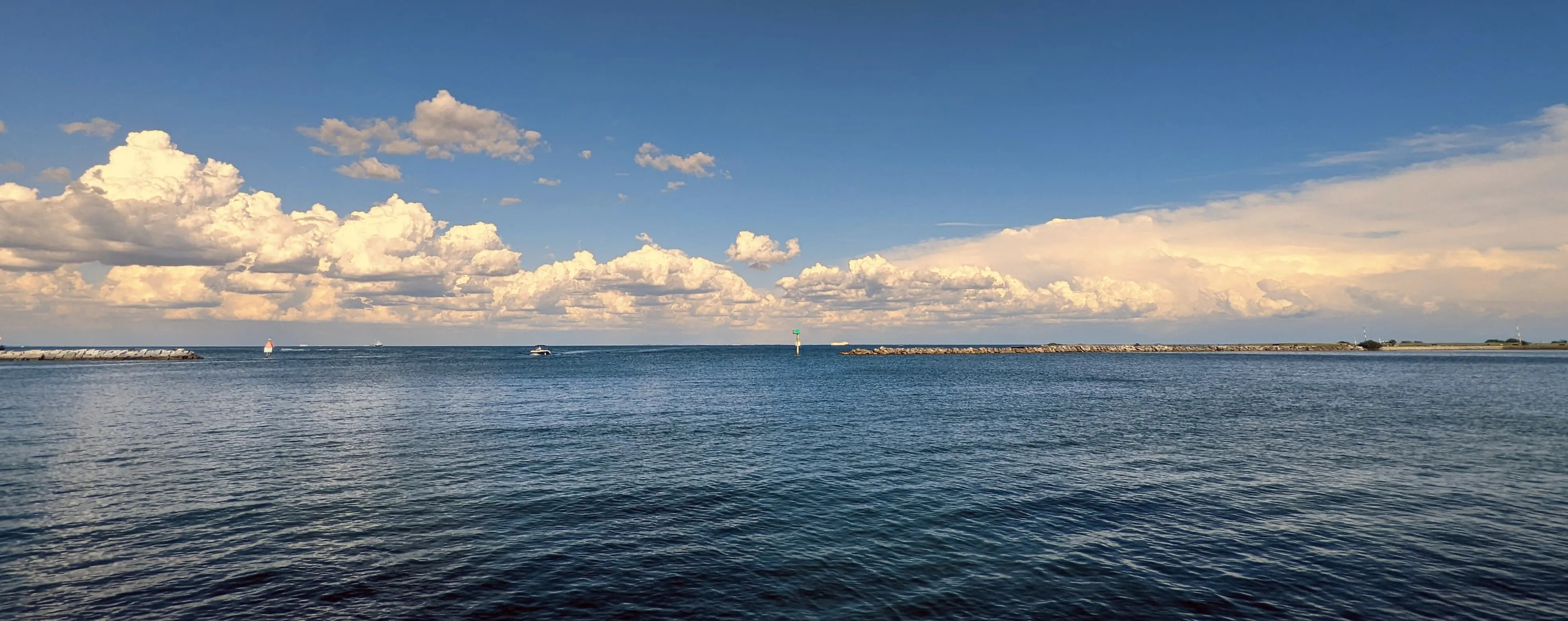
The same location where nothing of the pier remains today.
While modern development has transformed the site completely, keen observers can still spot subtle traces of its railroad heritage lurking beneath.

The submerged remnants of the circular foundations of the old railway pier at Demen’s Landing.
Few people realize that a fragment of St. Petersburg’s historic railway still operates today. While trains no longer reach the downtown waterfront, CSX maintains active tracks terminating just north of 5th Avenue North, near Interstate 275, with the Cement Factory a couple of miles north being the last stop. Though the Orange Belt Railway’s heyday is long past, this rail line preserves a piece of its history.
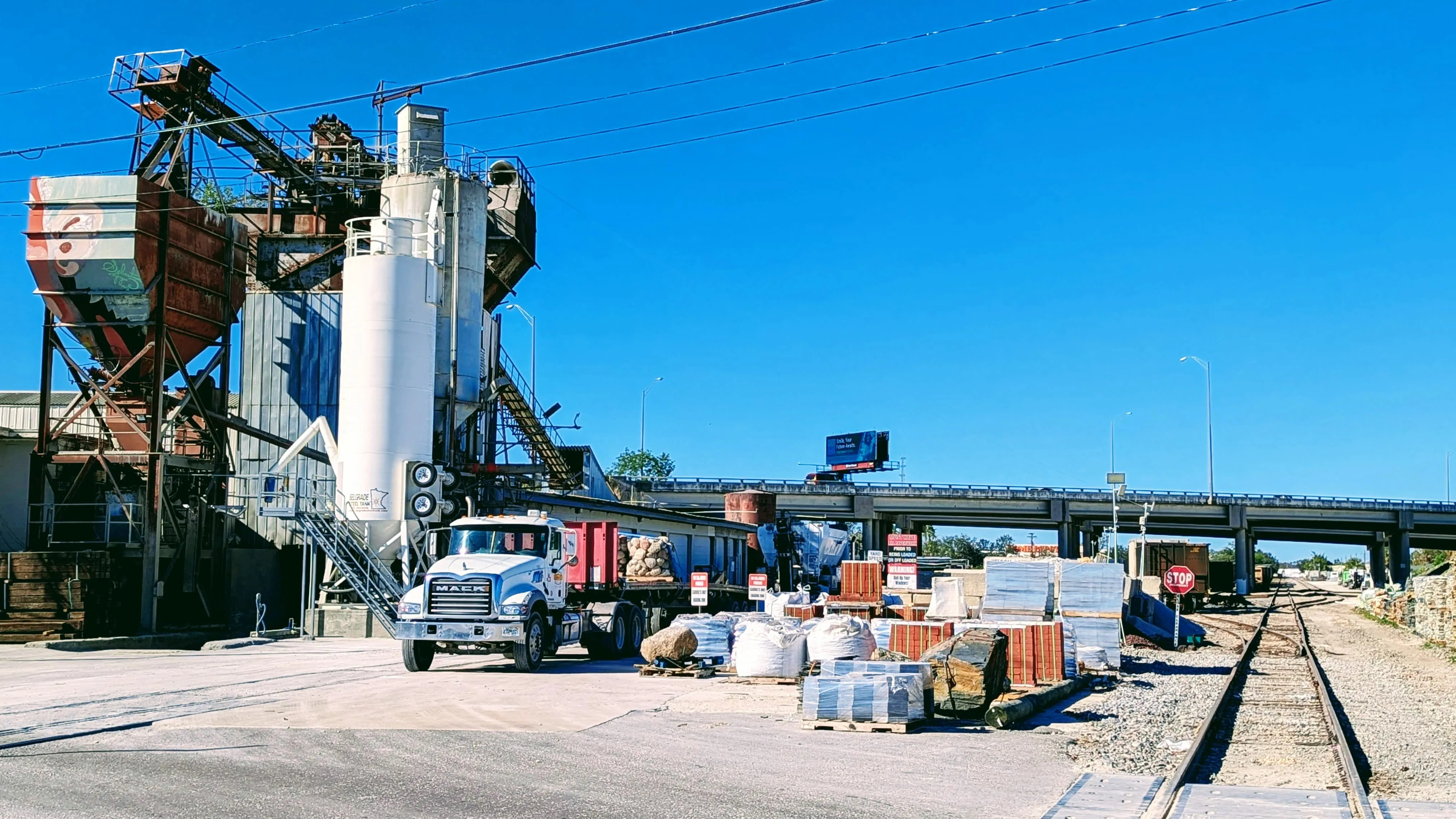
Last stop on the historic railroad in St Petersburg — a cement factory off 13th Ave N
Further south, sections of the old railway line exist today as overflow parking lots, completely neglected, a stark contrast to the city’s new developments. I wonder if the people parking here realize they’re on a spot with over 100 years of history.
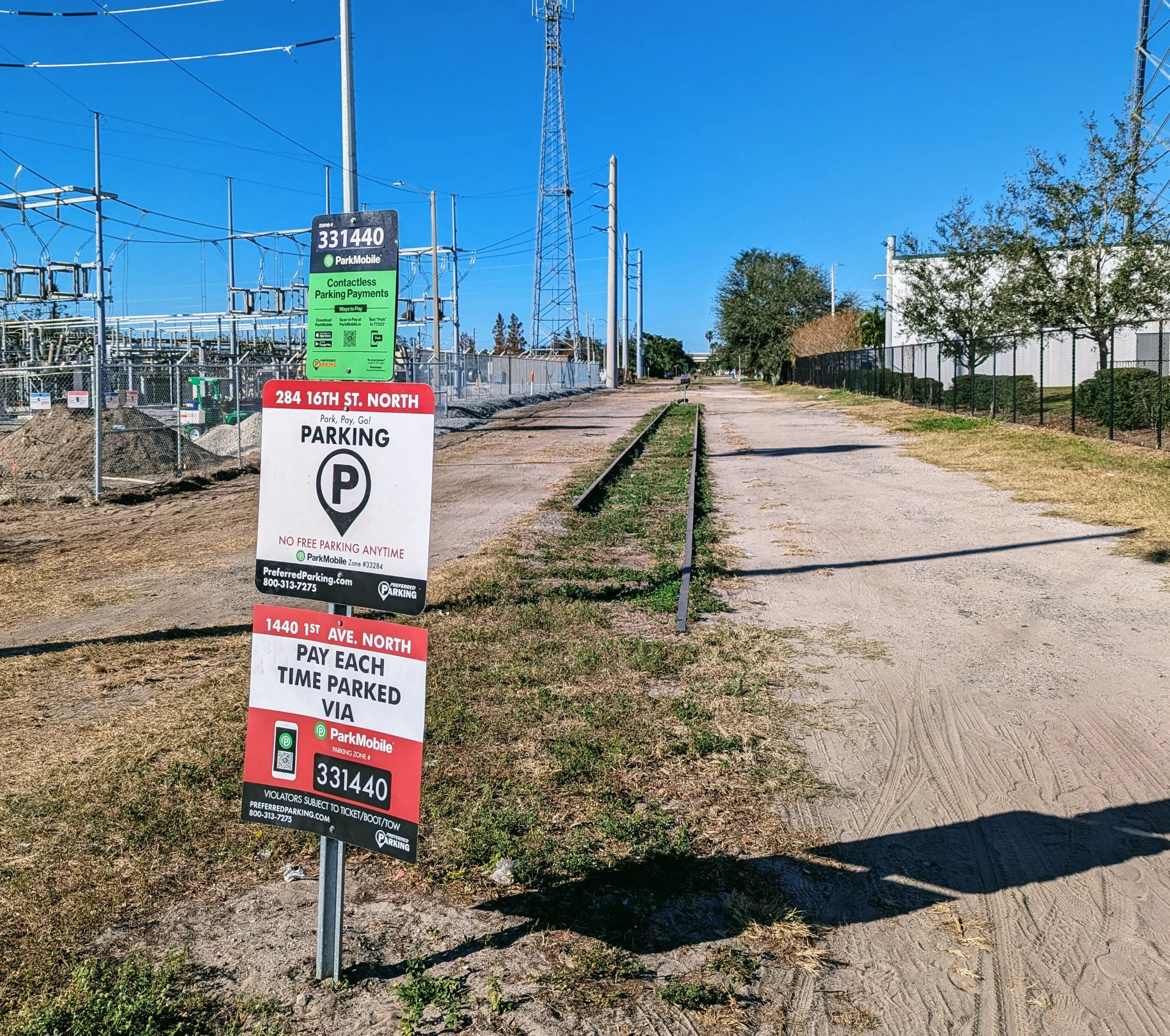
A diagonal section of the line converted into a parking lot.
The original tracks leading to the railway pier have long been replaced by modern construction in downtown. However, the most visible remnants of the old Orange Belt Line can still be found off the pavement in the Gas Plant District area.
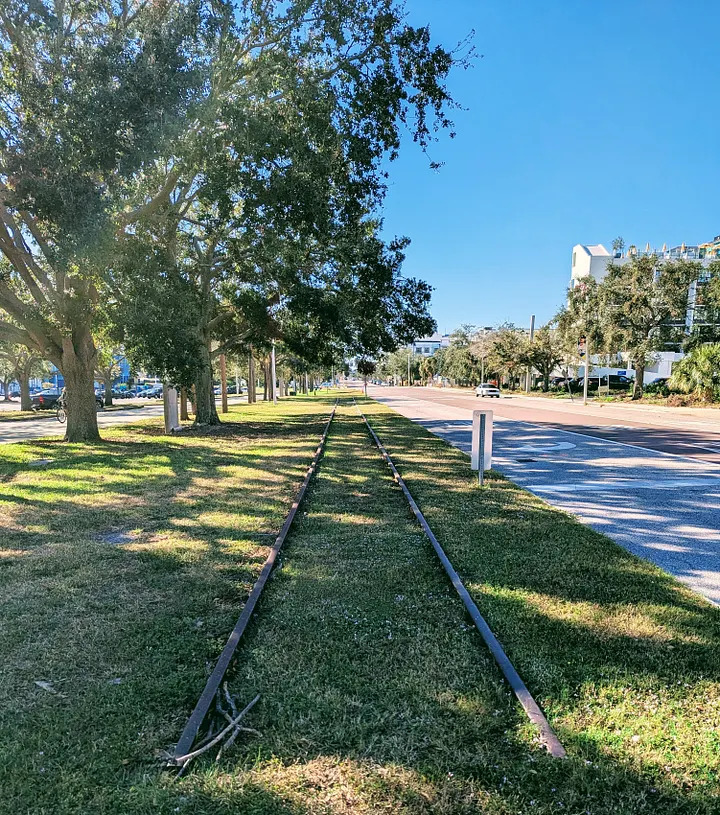
The small stretch of tracks in the Gas Plant District.
The Tampa and Gulf Coast Railroad tracks once connected to the Orange Belt Railroad at the Gas Plant District, near today’s Tropicana Stadium. These abandoned tracks were later repurposed into the Pinellas Trail, transforming the historic railway corridor into a vibrant, modern space for the community.

An old bridge that once carried the Tampa and Gulf Coast Railroad, now serving the Pinellas Trail.
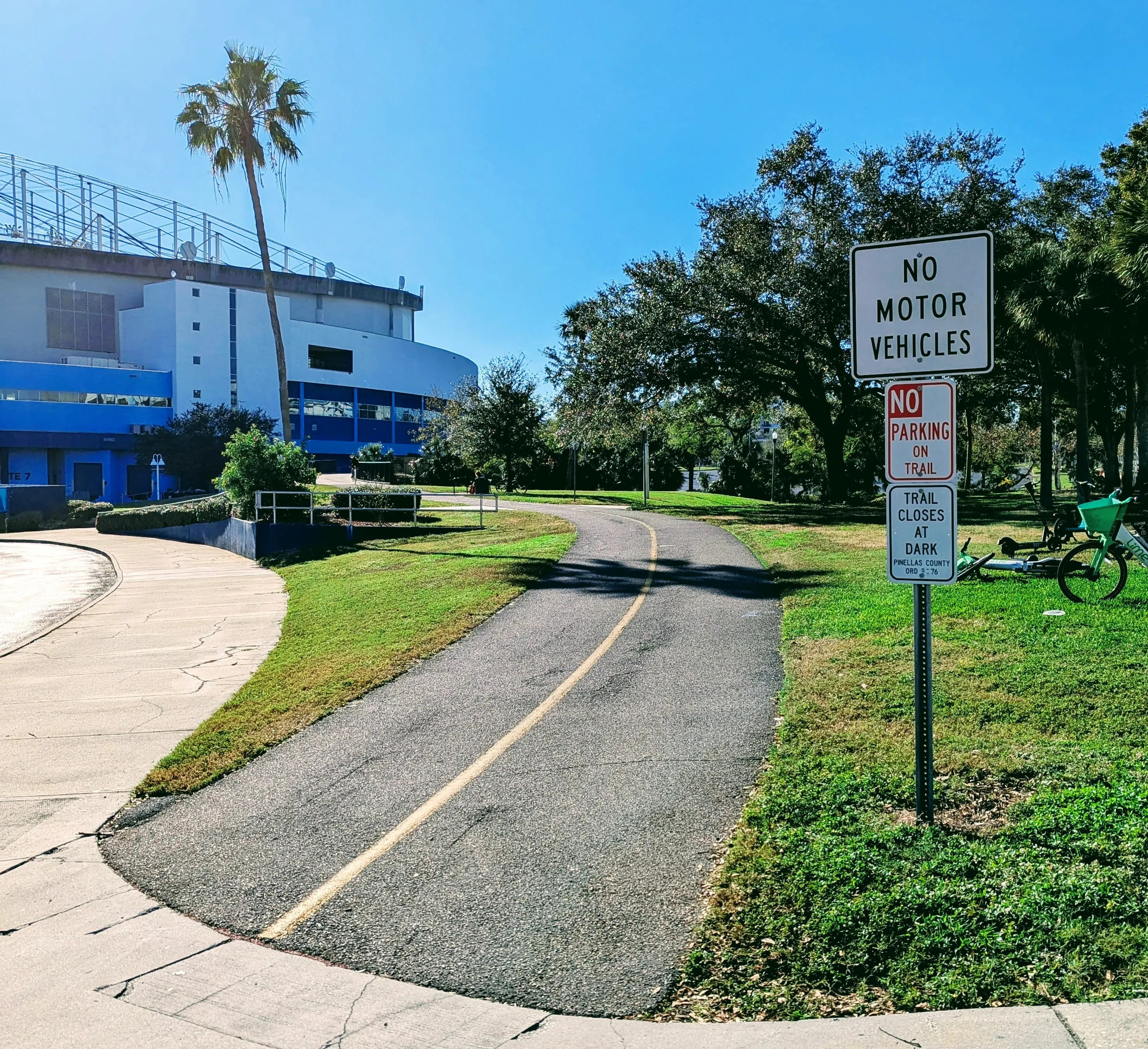
The spot where the T&G Railway connected to the Orange Belt Railway
As I walked along these forgotten tracks, tracing the path of a railway that once connected distant cities and brought life to a fledgling St. Petersburg, I couldn’t help but reflect on how history, in all its layers, quietly shapes the present.
The remnants of the Orange Belt Railway — from its still-operating northern stretch to its repurposed sections as the Pinellas Trail — stand as witnesses to the dreams and ambitions that transformed this city. While downtown’s rails may have faded into parking lots, much of the original line continues to serve the community in new ways, reminding us that every city is built on a foundation of stories, struggles, and connections that adapt rather than disappear.